Search This Blog

Saturday, July 2, 2016

8 Biblical Tips for a Healthy Mind (Dealing With Depression and Anxiety)


It is hoped that this article will bring some Biblical enlightenment and encouragement to anyone suffering with thoughts of depression, anxiety or doubt. It is both a Bible study and a personal testimony (In fact, you may watch my testimony of dealing with clinical depression and OCD at the bottom of this page if you would like.) This article is not exhaustive. There is much more that could be added to it  - but it’s a start. 

It is important to clarify that this is a general article for all people ( although it is obviously geared towards Christians) – However if you think you may have an actual mental disorder ( as I do) such as clinical depression, obsessive compulsive disorder or schizophrenia I strongly urge you to see a doctor ( as I have) and do not be afraid to take the appropriate medication (as I have) if that is what is needed to make you whole. 


#1 The Still Small Voice of God


“…And behold, the LORD passed by, and a great and strong wind tore into the mountains and broke the rocks in pieces before the LORD, but the LORD was not in the wind; and after the wind an earthquake, but the LORD was not in the earthquake; and after the earthquake a fire, but the LORD was not in the fire; and after the fire a still small voice.” 1 Kings 19:11-12

When Elijah was discouraged, afraid and on the run the Lord spoke to him in a “still small voice”. It is important to understand the gentleness and calmness in which the Holy Spirit speaks to us because sometimes we confuse the Holy Spirit’s conviction with the enemy’s condemnation. Know the difference. “There is therefore now no condemnation to those who are in Christ Jesus…” (Romans 8:1).

 You can rest assured that God is not the one screaming condemnation at you – that is Satan who is rightly called “The Accuser of the brethren” : “’…for the accuser of our brethren, who accused them before our God day and night, has been cast down.” (Revelation 12:11) . While Satan is our accuser, Jesus is our great Advocate. We must rest in the peace that Jesus has made for us with God – by His grace and love and atoning work on the cross. 


#2 God’s thoughts are not your thoughts

“For My thoughts are not your thoughts, nor are your ways My ways,” says the LORD. For as the heavens are higher than the earth, so are My ways higher than your ways, and My thoughts than your thoughts.” Isaiah 55:8-9

When our thinking becomes dark, fearful or confused how refreshing it is to be reminded that God’s thoughts are not our thoughts – they are, in fact, high above our thoughts. They are thoughts full of light, peace and clarity and we need to pray that we would get a glimpse of those thoughts and allow them into our own broken minds. 

At the same time what a blessing it is to know that even though He is so high above us He still “Understands our thought afar off…” and is “Acquainted with all our ways…” (Psalm 139:2-3) . God knows the darkness and suffering we sometimes go through. He knows us intimately, He cares, He “gets us”. He is both transcendent of our minds and lovingly understanding of our minds.... 


#3 A Sound Mind

“For God has not given us a spirit of fear, but of power and 
of love and of a sound mind.” II Timothy 1:7

Here Paul contrasts a spirit of fear with one of power, love and a sound mind. These are not things we can receive by our own strength but rather they are given to us by the grace and power of God as we seek them and allow them to permeate us. This verse is not meant to make us feel guilty or inadequate if we don’t feel like we have a sound mind but rather to encourage us that it is God’s desire and gift for us to have a sound mind.  

Vine translates the Greek sophronismos as literally  “saving the mind”. Other meanings include “restoring one to his senses” and to have moderation and self-control in your thinking.  For me there is always a tendency towards extreme or “catastrophic” thinking.  This is the opposite of moderated thinking. We can liken a well moderated mind to an online forum where many people make many different comments on many different topics but the hardworking and wise Moderators of that group are quick to keep the group in check or “controlled”. Comments ( or “thoughts”) that are toxic or unhealthy (i.e. Trolling) are quickly deleted. In the case of the mind, the Bible and wise Christian advisers are the standard by which the group is moderated. 


#4 Talk it out

“Where there is no counsel, the people fall; 
But in the multitude of counselors there is safety.” Proverbs 11:14

The latter phrase ( “in the multitude of counselors there is safety”) is repeated 3 times in Proverbs (15:22, 24:6)! For many of us the natural inclination is to keep our negative, dark or confused thoughts to ourselves. We fear what others might think of us if we open up to them. We fear they may think we are silly, weak or even evil. So we close ourselves up, put on a good show and silently retreat into ourselves. Nothing could make the devil happier. 

A Pastor once told me that when the enemy wants to try and destroy someone he will try to separate them from the church and other Christian friends and family – in the very same way a wolf will try to separate a sheep from its flock and its shepherd. Don’t let this happen to you… be courageous enough to be vulnerable to a fellow Christian who is wise, understanding and trustworthy. Sometimes we can receive wonderful Biblical advice that will help us but there is also a true freedom in just saying our thoughts out loud to another person – using them as a sounding board. Whether this is a friend, a pastor or a professional counselor – I urge you to talk it out! 


#5 Positive Thinking

“Finally, brethren, whatever things are true, whatever things are noble, whatever things are just, whatever things are pure, whatever things are lovely, whatever things are of good report, if there is any virtue and if there is anything praiseworthy—meditate on these things.” Philippians 4:8 

First let me say that Biblical positive thinking is nothing like the Oprah-esque type of positive thinking we hear so much about today ( i.e. “The Secret” etc). This latter thinking would have us believe that everything we need to be happy lies within ourselves if only we can tap into it through positive thoughts. In contrast the Bible teaches us to think positively (as the above verse indicates) but to know that this positivity is rooted in the character of God and can only come from outside of us – from Him. 

Now a related word on self-esteem. When it comes to the area of self-esteem there are 2 ways in which we can go wrong. One is the more obvious to us Christians and that is self-exaltation or pride. We are often warned about this in sermons and rightfully so. Self-exaltation is repugnant to God. But what we also must realize is that we can go wrong just as easily by being “down on ourselves” all the time or self-loathing. Self-loathing is just as much pride and is just as destructive as self-exaltation – it is simply the other end of the spectrum. We must not focus on “self” at all except to know that God loves us just the way we are and that it is only in His power and grace that we can become more refined and Christ-like as we focus on Him. 


#6 Don’t Overthink (Keep It Simple) 

“He has shown you, O man, what is good; and what does the LORD require of you, But to do justly, to love mercy, and to walk humbly with your God?” Micah 6:8

It may seem strange but for one who is prone to overthinking some of the best advice I have ever received was to “Keep it simple” or K.I.S.S.   – you can decide what the last “S” stand for.  The reason I used the above verse for this section is because it reminds us of the simplicity of the Christian faith. It reminds us to stop over-thinking everything and just get back to the basics. Don’t worry about doing everything – just do something. Do something just, do something merciful, walk humbly with God. Let God work out the complications. 

Sometimes when we are depressed or anxious it can seem impossible to face the day. But one of the keys is to simply do something – no matter how small or insignificant you may think it is. Whether it is reading one Bible verse, praying for one person or just making your bed that morning – it is something and it gets us on the right track, moving in the right direction. It builds our confidence and sense of accomplishment – it is simple but it is healthy. 


#7 The Armour of God

“Put on the whole armor of God, that you may be able to stand against the wiles of the devil… above all, taking the shield of faith with which you will be able to quench all the fiery darts of the wicked one. And take the helmet of salvation, and the sword of the Spirit, which is the word of God…” Ephesians 6:11, 16-17 

I suggest taking the time to read and study this entire portion of Scripture as it is impossible to cover all of its contents in this one point. For the purposes of this article we will focus in on the shield of faith and the helmet of salvation. The “fiery darts” mentioned above are usually taken to mean nasty thoughts and feelings thrown at us by the devil – the enemy of our souls, our hearts and our minds. The Roman shields to which Paul was referring often had a coating of leather on the front that was soaked in water so that they could quite literally quench fiery darts or arrows thrown at them. In the same way, it is faith in the promises of God (The sword of the Spirit) that will shield us against these thoughts and prevent them from taking hold ( or lighting a fire so to speak). 


David Guzik says this concerning he helmet of salvation: “1 Thessalonians 5:8 speaks of the helmet of salvation in connection to the hope of salvation.  The helmet of salvation protects us against discouragement, against the desire to give up, giving us hope not only in knowing that we are saved, but that we will be saved.  It is the assurance that God will triumph.” 


#8 Praise, Worship and Thanksgiving

“But at midnight Paul and Silas were praying and singing hymns to God, and the prisoners were listening to them. Suddenly there was a great earthquake, so that the foundations of the prison were shaken; and immediately all the doors were opened and everyone’s chains were loosed.” Acts 16:25-26

We cannot underestimate the power there is in praising God through difficult times and dark thoughts. Here Paul and Silas had just been viciously beaten and were now in prison in stocks. Yet they praised, worshipped and thanked God – the result was freedom - “everyone’s chains were loosed”. In a similar reminder Nehemiah tells the children of Israel “…Do not sorrow, for the joy of the LORD is your strength.” (Nehemiah 8:10). 

A.W. Tozer once said that “The root of all evil is the suspicion that God is not good.” Know and believe in the goodness of God and praise Him for it. In the midst of despair or anxiety, remind yourselves of all of your blessings and of all the ways in which God has led and delivered you in the past. Know the future, though it may come with trials, is bright – God has good plans for you!




Tuesday, June 14, 2016

My Thoughts on the Age of the Universe and Earth


This purpose of this blog post is to arrange my thoughts on the age of the Universe and Earth. It is not meant to be a professional essay.

"It is not so important how God created the universe as it is why He created it." Don Gibbs


#1 I don't buy the theory of Macro Evolution (whereas Micro Evolution is obvious). Macro Evolution ( self-admittedly) does not account for the origins of life - it has no reasonable answer as to how life first began. Other concerns I have about it include the holes in the fossil record and the existence of human consciousness. 

#2 When it comes to most of the varying views of Christians as to how the Earth was created I take a generally agnostic view ( I simply don't know). One view though that allows for an ancient Universe/Earth and that seems remarkably clear to me from the Biblical text is summed here by Dr. John Lennox, a Christian, devout Bible Believer, Mathematician and Philosopher of Science at Oxford: 

“…the initial creation act ( Gen 1:1-2) is separated from the 6 days of creation that follow it. You will find this structure followed, for instance, in the section of the ESV. The reason is that there is a clear pattern to the days: they each begin with the phrase “And God said” and end with the statement “and there was evening and there was morning, Nth day.” This means that, according to the text, day 1 begins in verse 3 and not in verse 1. This is made clear in the original text by the fact that the verb “created” in Genesis 1:1 is in the perfect tense, and “the normal use of the perfect at the very beginning of a periscope is to denote an event that took place before the storyline  gets under way.

This implies that “the beginning” of Genesis 1:1 did not necessarily take place on day 1 as is frequently assumed. The initial creation took place before day 1, but Genesis does not tell us how long before. This means that the question of the age of the earth ( and of the universe) is a separate question from the interpretation of the days, a point that is frequently overlooked. In other words, quite apart from any scientific considerations, the text of Genesis 1:1, in separating the beginning from day 1, leaves the age of the universe indeterminate. 


It would therefore be logically possible to believe that the days of Genesis are twenty-four hour days ( of one earth week) AND to believe that the universe is very ancient. I repeat: this has nothing to do with science. Rather, it has to do with what the text actually says. There is a danger of understanding the text saying less than it does, but also a danger of trying to make it say more.”  ( From his book '7 Days that Divide the World')

#3 In addition to this it seems clear that science ( so far) is showing us that the Universe/Earth is very old. This is not about Evolution  ( which I do not believe for Scriptural, Scientific and Philosophical reasons) but simply the age of things. This link sums up the many different ways scientists have come up with the age of the Universe: http://rationalwiki.org/wiki/Evidence_against_a_recent_creation . I don't necessarily agree with all of them being accurate of course but many Christian scientists believe cosmology, in particular,  is clear that the Universe is ancient - 

"On Earth, the delay caused by the speed of light is incredibly minor — when you look at an object a mile away, the light has been travelling for five microseconds. When you look at the Sun, you are seeing light that has been in transit for 8.3 minutes. ...
On the cosmic scale of things, this delay is far from minor and really is noticeable. When astronomers look at the closest star to Earth (Alpha Centauri), which is roughly four light years away, they are seeing the star as it was four years ago from our perspective. When astronomers look at objects in the region of space known as the "Hubble ultra deep field", they are seeing the stars there as they were over ten billion years ago. Light we are receiving from these fields has been travelling for ten billion years, and the universe must have, therefore, existed long enough for that transit time to take place." 

#4 I'm okay with agreeing to disagree with my fellow Christians as to the age of the Universe/Earth. I believe it is an issue similar to the "end times" or gifts of the Spirit - there is some room to disagree ( Romans 14). 

The real issue for me , however, is that I fear when we focus so much on a belief that says the Earth is only about 7,000 years old ( Young Earth Creationism) we are entering into a battle that the Lord has not sanctioned, that the Bible does not demand from us. Worse yet, I fear that an obsession with this view could, in fact, hinder the Gospel of Jesus Christ. We cannot give the impression that in order to become a Christian one MUST believe that the earth is young. 


Thursday, April 7, 2016

Confessions of a Zero-Point Calvinist by J.B. Nicholson Jr. (Yes, You can be neither Calvinist nor Armenian)

BORN BY THE RAILROAD TRACKSby J. B. Nicholson Jr. 
Confessions of a Zero-Point Calvinist


*This article originally appeared in Uplook Magazine, which is available at Uplook.org


I grew up in a passionately evangelistic assembly where we were taught the railroad track view of divine sovereignty and human freedom. I deeply admired the brethren who taught me the Word and consider it one of the best Bible schools I could have attended. These men took every word of the Bible seriously. They did not harp on particular doctrines and did not press exotic views.

It was not Calvinism we heard, for man could freely accept or reject the gospel. Christ died for all, and the gospel was offered to everyone. However, having accepted Christ, we were told, a new believer discovered that he was destined for heaven before time began. Was it a real choice? Yes, they insisted. He must repent and believe the gospel in order to be saved. But could this elect person actually choose to perish? Theoretically, yes, but actually, no. God had elected him. These are parallel truths, they told us. Like railway tracks, they appear to meet at the horizon but they would only actually “meet” in the mind of God. I could not help wondering what would happen to that train of thought when the lines actually met. In these discussions I felt more like an engine spinning in the round-house. I saw the words “elect” and “chosen” in the Bible, but what did they actually mean?

In those days I rarely heard the words Calvinist or Arminian. But a caricature developed of the two views: Calvinists believed God saved you and you couldn’t lose it; Arminians believed you chose to be saved, so you could also choose to “unsave” yourself. And everyone was in one camp or the other, it was said. If that definition held, I would be with the Calvinists. But it doesn’t.

Don’t get me wrong. Some of my friends are unabashed Calvinists. Others reject the tag but believe the teaching, or most of it. And I’m surrounded by fine, hard-working Calvinists in Grand Rapids. (In this area of the country I regularly tiptoe through the TULIP.) As well, many of the representatives of evangelicalism— R. C. Sproul, D. J. Kennedy, John Stott, J. I. Packer, and now John MacArthur—promote Calvinistic soteriology.

John Calvin (1509-1564) systematized the teachings of the Reformation, largely based on Augustinian theology. Jacobus Arminius (1560-1609), a scholar in the Reformed Church (who admired Calvin), questioned certain of his teachings. His followers called on the Dutch theologians to consider whether Calvin’s teachings were biblical at five points. At the Synod of Dort (1619), Arminianism was rejected, and the answer stated five points as the Church’s position. But after careful study, I find myself a 0-point Calvinist. Here’s why:

1. Total Depravity (Inability): 

The notion not that every man exhibits his depravity as thoroughly as he could, but that the guilt of Adam’s sin rests on everyone, and the corruption of sin extends to every part of man’s nature, making him incapable of responding to God’s offer of salvation. The Calvinist believes man is not only separated from God but insensible to God, “unable of himself even to stretch forth his hand to receive salvation” (Baker’s Dictionary of Theology, p. 109). Thus God must quicken man before he can believe.1What does Scripture teach? That man has been damaged in every part by the Fall, and does not seek God by his own initiative (Rom. 3:10-18). But God has come seeking sinners. How many sinners? The world! His light lightens every man who comes into the world. Paul could preach to the pagans at Mar’s Hill: “He [is] not far from every one of us,” and “God commandeth all men every where to repent” (Acts 17:27, 30).

The verse, “There is none that seeketh after God,” is an important verse, but it is not the whole Bible. What of “Seek ye the Lord while He may be found…” (Isa. 55:6)? See also Acts 15:17; 17:27. But, says the Calvinist, man is dead and cannot respond to the offer of the gospel. Reformed scholar Loraine Boettner writes: “If any person believes, it is because God has quickened him; and if any person fails to believe, it is because God has withheld that grace.”2 Yet the passage which is the basis for this view (Eph. 2:1, 5) speaks of the dead walking, and having a manner of life. It is true that man is spiritually dead, but to think of death as inability to receive God’s gift is wrong. Death in the Bible is separation. Man is still morally responsible and capable of responding to invitations—“ come,” “believe,” “trust,” “receive”—the list is extensive. The Judge at the last trial declares the basis of His judgment in John 3:16-19—not because they are non-elect, or because they were not given faith,3 but because they chose darkness over light. See also Jn. 20:31; 2 Thess. 2:10; Heb. 10:39.

2. Unconditional Election: 

This is said to be the act of God in eternity, to choose to save certain ones whom He fore-loved, entirely apart from any cause in them or choice by them. God has indeed chosen some (Christ, Israel, the Church) but for a role—to be the means of accomplishing His purposes. The basis of that choice is found in 1 Corinthians 1:23-31 (see also Jas. 2:5).
Dr. James Orr states: “Electing love, one comes to see, is never election to the exclusion of others, but election with a view to the future larger blessing of others.”4M. R. Vincent, in his Word Studies in the New Testament(Vol. IV, p. 16) writes, “Election…and the kindred words, to choose, and chosen or elect, are used of God’s selection of men or agencies for special missions or attainments; but neither here (1 Thess. 1:4) nor elsewhere in the N.T. is there any warrant for the revolting doctrine that God has predestined a definite number of mankind to eternal life, and the rest to eternal destruction.”
It should be noted that multitudes in Israel (including Judas Iscariot5), though elect, perished, while some nonelect (like Rahab and Ruth) were saved. The election of Christ obviously had nothing to do with His being saved.

What of “chosen you to salvation” in 2 Thessalonians 2:13? Lightfoot, Kittel, and Arndt & Gingrich all concur that this is not the usual word for election. Plummer writes: “The verb (eilato) is rare in Biblical Greek, and is not used elsewhere in N.T. of election by God…It does not imply predestination to final salvation…”6 The word “chosen in the Lord” (Rom. 16:13) is translated as “eminent” by Vine7 and by Young as “the choice one.”8
Believers are not elected and therefore put into Christ any more than Israelites were chosen and therefore put into Israel. In the last dispensation election was based on natural birth; now it is based on spiritual birth. The sphere of our choosing is “in Him” (Eph. 1:4). How does one come into that sphere of privilege? “…through sanctification of the Spirit and belief of the truth” (2 Thess. 2:13; see also 1 Pet. 1:2).

3. Limited Atonement: 

This idea that the death of Christ was only for the elect, that His death not only provided salvation, but accomplished it for the elect alone. But what does Scripture teach? That God so loved the world (Jn. 3:16); that He is the propitiation not for our sins only, but for the whole world (1 Jn. 2:2); that the “righteousness of God…is by faith of Jesus Christ unto all and upon all them that believe” (Rom. 3:22). The last invitation in the Bible says: “Whosoever will, let him take the water of life freely” (Rev. 22:17).

4. Irresistible Grace: 

The notion that everyone on God’s “list” will be saved and cannot resist God’s grace when He “sweetly force[s]” us in. This because God’s sovereignty cannot be thwarted. But what does Scripture teach? The Lord Jesus wept over Jerusalem, saying, “I would [willed]…ye would not.” Why was He weeping? He wanted them; they did not want Him. He let them have their way. To those in His day, Jesus said: “Ye will not come to Me that ye might have life” (Jn. 5:40). They might have had life, but they would not come. Stephen declared, “Ye do always resist the Holy Ghost: as your fathers did” (Acts 7:51). Notice also Heb. 10:29 ["Of how much worse punishment, do you suppose, will he be thought worthy who has trampled the Son of God underfoot, counted the blood of the covenant by which he was sanctified a common thing, and insulted the Spirit of grace?"].

5. Perseverance of the Saints: 

At first this appears to be the biblical doctrine of eternal security. But this point teaches not merely that the saints will persevere (or be preserved, more correctly) but that the proof that you are a saint is that you persevere. This is necessary in the Calvinistic system because if not only the provision but procurement of salvation is all of God, how do I know when I am saved? As stated in Baker’s Dictionary of Theology, “The fruits which accompany salvation supply to us men the proof of God’s election” (p. 179). While it is true that fruits supply proof to others: “…by their fruits ye shall know them,” a recipient of the gospel does not need to wait until fruit develops in his life to assure him that he is saved. God’s promise is our own proof: “as many as received Him, to them gave He power to become the sons of God, even to them that believe on His name.” [John 1:12]

God sovereignly chose to give man a will. Christ has fully provided salvation for all who will receive His gift, a gift to which we contribute nothing. The Spirit must initiate the process, and has done so—He has come to convince the world of sin, righteousness, and judgment. Faith comes to the individual, not as a special gift to some, but by hearing the Word of God. There is no merit in the sinner’s empty hand receiving this wonderful gift. To believing sinners come all the blessings; to God be all the glory.

ENDNOTES:
1 Are sinners quickened (or regenerated) before they believe? “Heareth…believeth…hath everlasting life” (Jn. 5:24). See also the order in Lk. 8:12; Jn. 20:31; Acts 16:31. 
2 The Reformed Doctrine of Predestination, pp. 166-167. 
3 Is faith the gift in Ephesians 2:8? Not according to Alford, Robertson, Bruce, Vine, Sir R. Anderson, and others (Divine Sovereignty and Human Freedom by Samuel Fisk, pp. 32-36). 
4 Sidelights on Christian Doctrine, p. 34. 
5 “I have chosen you” (Jn. 15:16) must be put beside Jn. 6:70. 
6 Second Epistle to the Thessalonians, pp. 75-76. 
7 Expository Dictionary of New Testament Words. 
8 Young’s Literal Translation

Tuesday, November 24, 2015

Emmanuel: Reflections on the Incarnation of Jesus Christ


God with us. That’s what Emmanuel means… and it was one of the most important names given to Jesus Christ upon His arrival into humanity.


And as always when God gives a name it has a great meaning.


Isa 7:14 "Therefore the Lord Himself will give you a sign: Behold, the virgin shall conceive and bear a Son, and shall call His name Immanuel.

Mat 1:23 "Behold, the virgin shall be with child, and bear a Son, and they shall call His name Immanuel,"  which is translated,  "God with us."

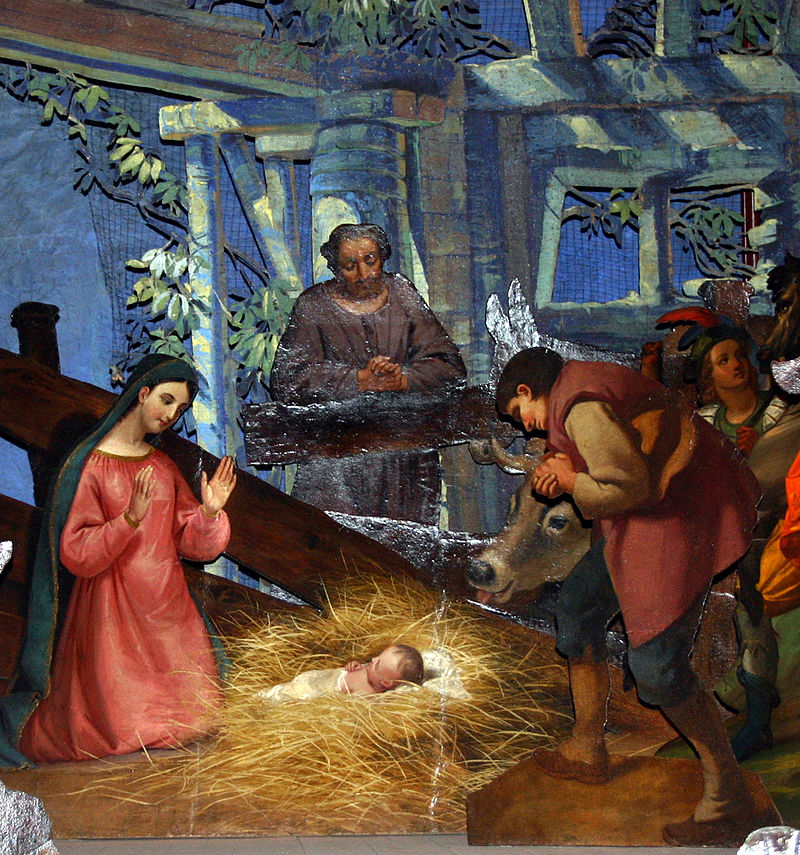
"Adoration of the Shepherds" by Gerard van Honthorst, 1622


The word “incarnation” , which we used above , literally means  “in the flesh”.

Many times I’ve tried to think of something analogous to God becoming a man – but every analogy seems to fail.  A man to a dog?  A start but not even close.

C.S. Lewis said this of  trying to comprehend the Incarnation…

"For certainly no seed ever fell from so fair a tree into so dark and cold a soil as would furnish more than a faint analogy to this huge descent and re-ascension in which God dredged the salt and oozy bottom of Creation."

For we know for certain that a man named Jesus existed. Although  the four Gospels contain most of what we know about Jesus and what he did and said – and we know that these have been proven historically reliable -  Jesus is also mentioned in secular works and there is really no legitimate debate in any circle as to whether He lived.

There is neither a question, if you read the Gospels, that He claimed to be the Son of God.  And I suppose this is where some folks get hung up …

A Virgin birth?


Paper on wood Nativity scene from 1750, Milan, presenting a tender image of Jesus.


At this point you may be scoffing or simply doubting the science of it all. For the latter – fair enough. But all that is needed for this to be a real possibility is the belief in the miraculous.

 If the miraculous can happen, then this could have happened.

Of course many claim the miraculous, and I do not intend to go into the apologetics of this specific miracle – but we must always ask ourselves “What becomes of said miracle?”  Does it flash in the pan and then die out ? Does it ever really affect the real world? Do the preceding, surrounding and proceeding events of the miracle ever lend credibility to its claim?

As for me, I believe Jesus when He said he was the Son of God and that is why I am thrilled to meditate on this idea of my God becoming a man – retaining His almighty power and purity – but inhabiting and experiencing humanity first hand.

Emmanuel – o how sweet that sound. God with us.


This year my wife and I were blessed with a child and I watched that child grow in the womb and eventually burst into this world.  It was violent and messy and more beautiful than I could have imagined.

And now I think – God did this? He subjected Himself to this?


From a zygote to an embryo to a fetus to a baby to a child to a teenager to a man – Jesus was all of these things or rather, all of these stages of humanity.

"What Child is this?"  The hymnist cried.


"The divine Son became a Jew; the Almighty appeared on earth as a helpless human baby, unable to do more than lie and stare and wriggle and make noises, needed to be fed and changed and taught to talk like any other child... The more you think about it, the more staggering it gets."

J. I. Packer


Hbr 2:17 Therefore, it was necessary for him to be made in every respect like us, his brothers and sisters,  so that he could be our merciful and faithful High Priest before God. Then he could offer a sacrifice (Propitiation) that would take away the sins of the people.

Hbr 2:18 Since he himself has gone through suffering and testing, he is able to help us when we are being tested.    NLT

 ------


Hbr 4:15 For we do not have a High Priest who cannot sympathize with our weaknesses, but was in all points tempted as we are, yet without sin.

 Hbr 4:16 Let us therefore come boldly to the throne of grace, that we may obtain mercy and find grace to help in time of need.   NKJV

Notice the phrases “in every respect” and “in all points tempted as we are, yet without sin”.

Could it be?

God knows what it is like to feel the sting of temptation?  The trials of humanity?

Every temptation ?  Every trial?

He knows what it is like to be as helpless and dependent as an infant, to be obedient to earthly parents as a child, to struggle with all the confusion of adolescence?

He knows all the human hurts of love and the lack thereof?

The depth of pain at the loss of a loved one? ( John 11:35)

The stress and sometimes, dreariness, of the daily grind?

The physical weaknesses of exhaustion, hunger, poverty, homelessness and so on?

Without being mentally ill Himself,  He yet knows their suffering and feels their pain?

Without so much as a dirty or ungodly thought, He still knows all the struggles men and women have with their sexuality?

Even a cursory reading of the Gospels will tell you that indeed Jesus has felt the relentless cruelty of “the bully”…. Both in mockery and physical assault, to a degree we know nothing of.

Do we struggle with self-esteem and body image issues?

We often have that “anglicized” image of Jesus in our minds – the tall,  blonde, blue eyed version. But the Bible tells us that there is no special physical beauty to Him, He was very average in appearances.

It was what was inside that changed history…


Isa 53:2 For He shall grow up before Him as a tender plant, And as a root out of dry ground. He has no form or comeliness; And when we see Him, There is no beauty that we should desire Him

In Matthew  chapter 8, verses 23-27, we have the account of Jesus in one moment sleeping in the haul of a boat  and in the next commanding the wind and the waves to be calm.

Both weary and Almighty?   What Man is this?

Jesus in the Garden of Gethsemane before His betrayal and crucifixion


And we have not even spoken of the spiritual yet. Oh, the sorrow and pain He suffered in Gethsemane and then the cross – forsaken, bearing all the wrath against humanity’s sin. He knew this wrath was justified – but the sin was not His.

Every sentence ever handed down to any man, woman and child – and those to come – He took, He served, He paid.

He ransomed us.

And this is love.


The Incarnation takes singer
Joan Osborne’s query,
“What if God were one of us?”
 to a whole new level.


As one preacher put it…

“ The Incarnation is God’s Grace made evident and obvious.               People matter.  
                        Life is sacred.
Men, women and children are worth the greatest sacrifice, the Supreme Effort, the Ultimate Gift….”

And it is , of course, of the utmost importance to understand that although Jesus felt the sting of temptation and trial – He did not sin, not even once in thought or deed.

As Charles Spurgeon said “Jesus entered into all that men did except their sins.”

In understanding how God became a man, we must understand the theology of the Bible in saying that Jesus Christ was not 2 different people – one deity and one human – Jesus was indeed both fully God and fully man all at once.

Nor was His Deity diluted by His humanity – for Jesus bore the full  nature of both the Divine and the human in one Person… and according to the Bible, He still does to this day and will forever.


Theologians have simply put it this way:


Remaining what He was, He became what He was not.


"The glory of the incarnation is that it presents to our adoring gaze not a humanized God or a deified man, but a true God-man - one who is all that God is and at the same time all that man is: one on whose almighty arm we can rest, and to whose human sympathy we can appeal." Benjamin B. Warfield

Have you ever wondered what God is like?

What if He were one of us?

 Read about Jesus this Holiday season and find out  – that was the whole point of the Incarnation and it is the whole point of Christmas…


"....who being the brightness of His (God's)  glory and the express image of His person, and upholding all things by the word of His power, when He had by Himself purged our sins, sat down at the right hand of the Majesty on high.." Hebrews 1:3

(* The phrase "express image" is the Greek word Charakter from which we get "Character")


He is the image of the invisible God……
Col 1:15


May God richly bless you all.


----------------------------------------------

When God the Almighty was making mankind through His own Word, He perceived that they, owing to the limitation of their nature, could not of themselves have any knowledge of their Artificer, the Incorporeal and Uncreated. He took pity on them, therefore, and did not leave them destitute of the knowledge of Himself, lest their very existence should prove purposeless.

For of what use is existence to the creature if it cannot know its Maker? How could men be reasonable beings if they had no knowledge of the Word and Reason of the Father, through Whom they had received their being? They would be no better than the beasts, had they no knowledge save of earthly things; and why should God have made them at all, if He had not intended them to know Him? But, in fact, the good God has given them a share in His own Image, that is, in our Lord Jesus Christ, and has made even themselves after the same Image and Likeness.

Athanisius, 4th century scholar and early church father

Friday, October 31, 2014

What Is a Saint ( All Saint's Day)

What is a Saint?

Today is All Saint’s Day in the Roman Catholic Church ( put at that place on the calendar to counter disturbing pagan festivals). The RC Church has quite a list of criteria in order for someone to become canonized as a saint but really what is a Saint? According to the Bible, specifically the New Testament, a saint is simply a believer in Jesus.  We tend to think of a saint as someone who has a halo above their head and is as pure as the driven snow; however,  that’s not what the Bible describes.

The Greek word hagios is where we get “saint” from – it means Holy, separated unto God. The early Greeks used it of something separated unto the gods but the Christian term signifies something that is separated unto God not by man but by God Himself. Someone who is not holy in and of himself but made holy by God through faith in Jesus’ atoning death and resurrection. In the Bible it refers to both believers who have gone before us and those who are now with us on earth. The Bible also uses hagios to refer to Jesus Christ as the "Holy One" or "Saint" of God (Mark 1:24 , Acts 3:14, 1 John etc..).  

Easton’s Bible Dictionary tells us that “It was not used as a distinctive title of the apostles and evangelists and of a "spiritual nobility" till the fourth century. In that sense it is not a scriptural title.”

Vine further says “This sainthood is not an attainment, it is a state into which God in grace calls men ; yet believers are called to sanctify themselves …consistently with their calling.”

They are not a saint because they are holy; they are holy because they are a saint – and they are only a saint because they believed in Jesus and trusted Him to forgive their sins.

Methodist, John Wesley did not agree that saints of any kind should be venerated or prayed to but he did agree that there is much for us to learn from the saints ( all believers) who have gone before us. After all that's what Hebrews 11 is all about. 

So if I am to honour this holiday at all then it will be to be thankful that God, through Jesus, has made me, ever the sinner,  into a saint – not by my works but by His grace. I can also glorify God by thanking Him for the many godly examples of past believers and current mentors, friends, brothers and sisters whom I can call saints and who have blessed my life and my Christian faith. To me, that is what sainthood is all about.


“Now, therefore, you are no longer strangers and foreigners, but fellow citizens with the saints and members of the household of God…” Ephesians 2:19